


When you look at home renovation photos, you see beautiful kitchens, cosy bedrooms, and stylish living rooms. What you rarely see is the demanding procedure behind the scenes. This includes the skip in the driveway, the budget spreadsheet, and even the frustrating phone calls about a late sofa.
According to MyBuilder, 27% of UK homeowners say they are more likely to invest in home upgrades in 2026. This growing interest in renovating instead of moving means planning ahead is crucial.
Planning ahead ensures a smooth project execution. With UK homeowners increasing their annual renovation spending, understanding these fundamental steps can help you plan better and avoid common headaches.
At Holmebridge House, we specialise in bespoke interior and exterior design. Our team revitalises antique spaces, fusing historical elegance with modern functionality.
Behind-The-Scenes Work for Successful Interior Design Projects
These seven behind-the-scenes tasks help keep every interior design project on track:
Set a Realistic Renovation Budget
Most renovation regrets start with a budget that is pulled out of nowhere. A good budget outlines costs for materials, labour, waste removal, delivery fees, and adds about 15% for unexpected costs. This additional cushion is important because old houses can hide surprises behind the walls.
Write it down, share it with your contractor, and check it weekly. A written budget works better than one you keep in your head.
Create a Flexible Project Timeline
A realistic timeline does more than just list dates. It includes the time needed for custom woodwork, the delivery time for tiles from Italy, and the drying time plasterers require before painters can start.
If these are not planned correctly, you could end up sleeping on a mattress in the dining room for three weeks longer than expected.
Good designers add extra days to each phase. Treat the schedule as something that can change, not just a wish list.
Clear and Prepare the Space
One of the least glamorous but most important parts of any interior design project is preparing the space properly before work commences. Removing old furniture, flooring, fixtures and renovation waste early can make the entire process far more manageable, which is why many homeowners use services such as ProSkips.co.uk during larger redesign projects.
A clear room allows workers to move freely, keeps your belongings safe from dust and paint, and helps you see the true structure of the space. The smell of fresh plaster is more noticeable when there is no old carpet on the floor.
Source Design Materials with Patience
The best interior design projects begin with samples laid out on a kitchen table. You can see paint colours in the morning light, feel fabric swatches against the sofa, and view tile remnants on the bathroom floor.
Ordering materials online without seeing the textures in person can lead to returns, delays, and disappointment when the “warm oak” turns out to look like an orange juice carton.
Try to visit showrooms when you can. Order samples early. Rushing to source materials often results in a final look that doesn’t match your vision.
Coordinate Trades and Contractors Smoothly
Plumbers, electricians, joiners, and decorators each have their own schedule, and the order of work is vital. The electrical work must be completed before the plasterboard is installed. Painting should wait until the dust has settled, not during the messy work.
A project manager or lead designer makes sure everything runs smoothly. Without one, you’ll end up as the unpaid coordinator, answering texts at 7am about where the tile is.
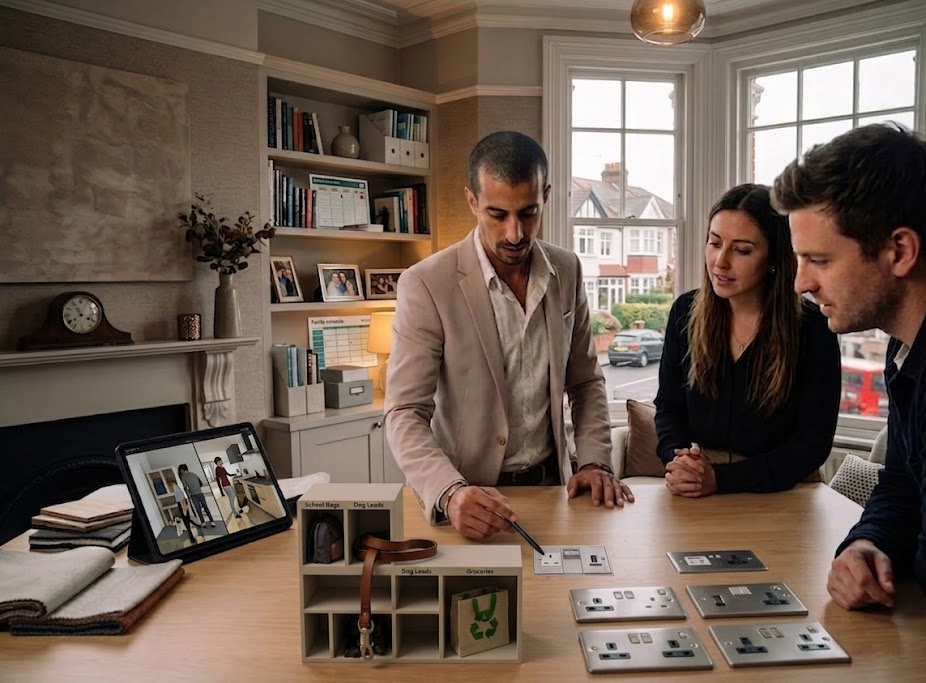
Design for Daily Practical Function
A beautiful space that cannot store your school bags, dog leads, and groceries will soon become frustrating. Good design considers your every day activities, such as morning rushes, school runs, and Sunday meals.
Place electrical outlets where you need them and create storage that keeps items out of sight without turning into a clutter trap.
Think about how you’ll actually use the room daily before you make any major changes. You’ll be glad you did later.
For a visual representation, check this guide that demonstrates how professionals really organise a room layout for better daily movement and functional flow.
Manage Renovation Waste and Sustainability
Renovation projects in the UK generate significant building waste each year. To reduce the environmental impact, homeowners and contractors are sorting rubble, wood, and metal for recycling. They are also donating usable furniture and picking up reclaimed materials when possible.
Keeping a worksite clean and organised is not only good for the planet, but it also helps ensure everyone’s safety.
For more insights or rules, explore this official guide on disposal of household waste.
Conclusion
Good interior design begins before you buy any decorations. Careful space planning, responsible waste management, and functional styling lay the groundwork for success. Get the behind-the-scenes work done right, and the final result will look easy. Ready to start your next home project? Begin with solid planning today, and the results will follow naturally. Contact us at Holmebridge House now.

